Year 2026 - Top 10 Game-Changing Energy Developments
1. China's Dominance of Clean Energy Supply Chains (Highest Global Impact)
A single country is the dominant refiner for 19 out of 20 energy-related strategic minerals, with an average market share of around 70 percent. China is the foremost refiner of copper, lithium, graphite, cobalt, and rare earth elements, and has developed more than 80% of the world's manufacturing capacity for solar photovoltaic panels. This represents a fundamental power shift in global energy geopolitics—whoever controls clean energy supply chains controls the future energy system, just as OPEC controlled oil markets in the 20th century.
Why it matters globally: This creates new dependencies that reshape international relations. China has already shown a willingness to use its dominance of critical minerals for geopolitical leverage, including recent export controls on rare earth elements and battery components. The West's attempt to reduce dependence on China could significantly slow the energy transition or drive-up costs.
2. AI-Driven Electricity Demand Surge (Transformative)
Global electricity demand from data centers is set to more than double over the next five years, consuming as much electricity by 2030 as the whole of Japan does today. By 2035, data centers are projected to account for 8.6% of all US electricity demand, more than double their 3.5% share today.
Why it matters globally: This is reversing decades of flat electricity demand in developed economies and forcing a complete rethinking of power infrastructure planning. In 2023, data centers consumed about 26% of the total electricity supply in Virginia and significant shares in North Dakota (15%), Nebraska (12%), Iowa (11%) and Oregon (11%). This concentrated demand is straining grids and driving electricity prices higher—wholesale electricity costs as much as 267% more than it did five years ago in areas near data centers.
3. OPEC+'s Weakening Pricing Power (Structural Shift)
OPEC+ still holds 6 million barrels per day of supply off the market, yet holding the Brent price above $80/barrel for the fourth year in a row in 2026 looks very challenging. Oil prices are projected to drop significantly despite production cuts.
Why it matters globally: This marks a potential end to OPEC's 50+ year dominance over global oil markets. The failure of production restraint to maintain prices signals that structural oversupply and weakening demand (particularly from China's electrification) are overwhelming traditional market management tools. This could accelerate the financial decline of petrostates and reshape Middle Eastern geopolitics.
4. The Bifurcation of Global Energy Policy (Geopolitical Fracture)
Under Trump, the US withdrew from the Paris Agreement and made a visible commitment to US fossil-fuel imperialism based on shale gas and LNG exports, or what Trump called 'energy dominance'. Meanwhile, 84 percent of renewable energy industry stakeholders cite geopolitical challenges as causing substantial delays in, or even the abandonment of renewable energy projects.
Why it matters globally: The world's largest economy and second-largest emitter is moving in the opposite direction from global climate goals, creating regulatory fragmentation that complicates international investment decisions. This could create competing energy blocs—a "clean energy alliance" versus "fossil fuel coalition"—similar to Cold War dynamics.
5. Massive LNG Export Capacity Surge (Market Restructuring)
There is a surge of new liquified natural gas export capacity, driven by new projects in the United States and Qatar that are set to increase export capacity from 578 billion cubic meters in 2023 to 850 bcm by 2030.
Why it matters globally: This 47% increase in export capacity fundamentally alters global gas security dynamics and reduces Russia's leverage over Europe. However, it could also lead to significant oversupply if demand doesn't materialize as expected, potentially stranding billions in infrastructure investments and depressing gas prices globally.
6. Nuclear Power Renaissance (Reversal of 40-Year Decline)
For the first time in several years, nuclear power rose as a proportion of total global energy generation in 2024, to 5 percent. Tech giants are now signing direct nuclear power purchase agreements—Amazon Web Services arranged to source approximately 960 MW directly from a nuclear power plant in Pennsylvania, while Google and Kairos Power signed an agreement to deploy small modular reactors to provide up to 500 MW.
Why it matters globally: After Fukushima led to widespread nuclear shutdowns, this marks a major reversal driven by AI's insatiable power demands and climate goals. This could unlock trillions in nuclear investments globally and reshape energy security calculations, particularly for countries seeking baseload power without fossil fuels.
7. The "Muddled Middle" Energy Transition Reality (Expectations Reset)
Despite climate commitments, oil, natural gas and coal consumption, and nuclear output, all reached record highs in 2024, with coal demand growing 50% faster than natural gas since 2019. Meanwhile, low carbon's share of investment climbed from 32% in 2015 to 50% in 2021 but has stalled since.
Why it matters globally: The world is experiencing peak fossil fuels and peak renewables simultaneously—both are growing. This creates a "dual energy system" that requires massive capital for both systems, complicating investment decisions and potentially stranding trillions in assets on both sides. The transition will be much messier, longer, and more expensive than anticipated.
8. Electricity Grid as the Critical Bottleneck (Infrastructure Crisis)
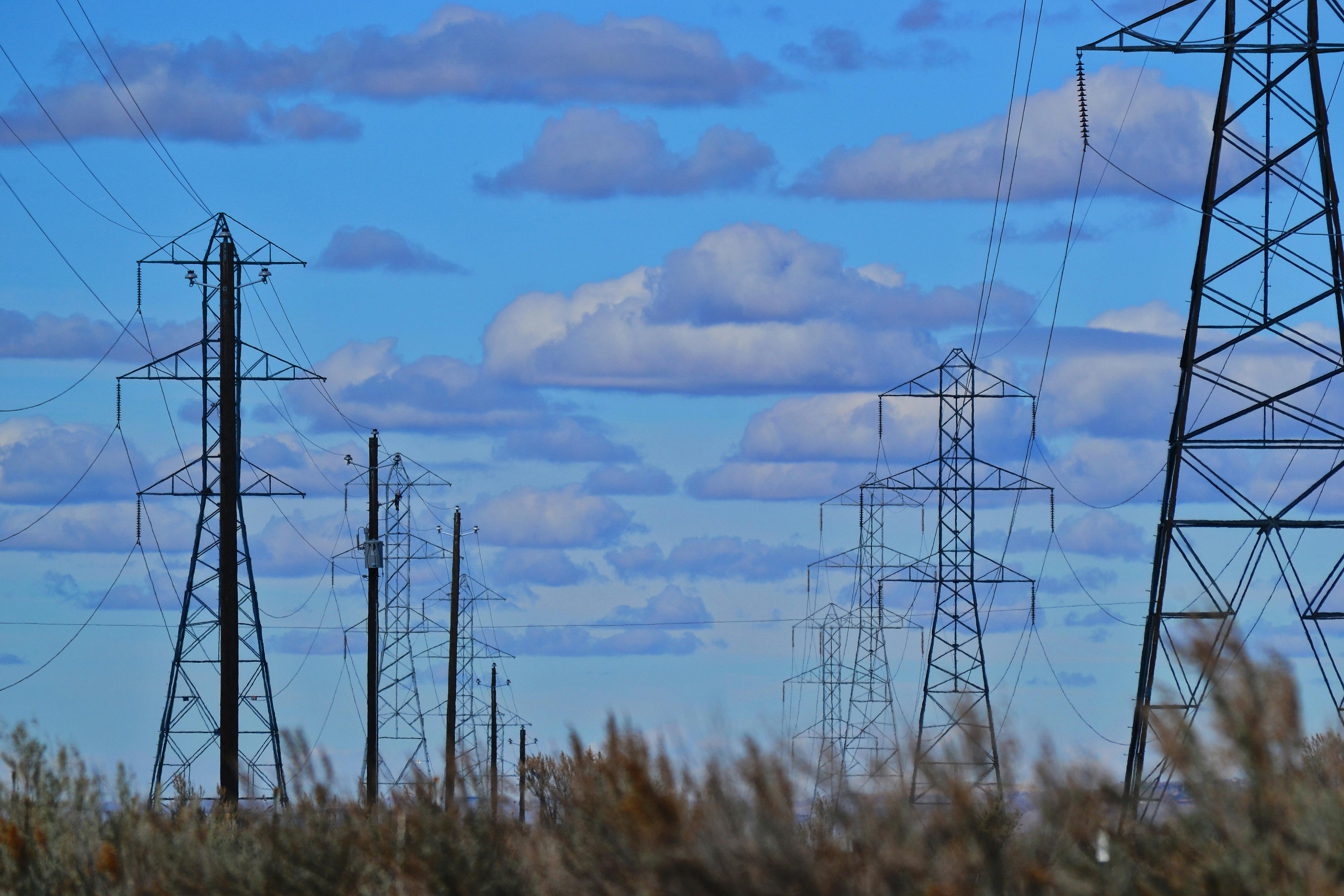
Goldman Sachs Research estimates that about $720 billion of grid spending through 2030 may be needed in the US alone. Copper prices show inflationary pressures with geopolitical concerns over supply resilience, and transmission projects can take several years to permit and several more to build.
Why it matters globally: The grid—not generation capacity—is becoming the limiting factor for both AI growth and renewable deployment. Permitting delays, copper shortages, and massive capital requirements mean that even where power generation exists, it cannot reach demand centers. This could throttle economic growth and limit AI deployment in key regions.
9. Critical Minerals as New "Choke Points" (Resource Geopolitics 2.0)
Concentration of critical minerals in specific regions—sizeable portion of the world's lithium reserves in South America and Australia, the Democratic Republic of the Congo dominating cobalt and Indonesia leading in nickel—has sharpened rivalries among China, the US and the EU.
Why it matters globally: Just as oil created OPEC and shaped 20th-century geopolitics, critical minerals are creating new dependencies and potential "resource nationalism." Countries with lithium, cobalt, and rare earths now have leverage similar to what oil producers once had. This could trigger a new wave of resource conflicts and strategic alliances.
10. Trump Administration's Energy Policy Whiplash (Policy Uncertainty)
The Trump administration's plans for trade tariffs pose a serious threat to global economic growth in 2026, potentially knocking 50 basis points off GDP growth and reducing global oil demand by 0.5 million barrels per day, wiping out half a year's growth. The administration also withdrew from the Paris Agreement and rolled back clean energy tax credits.
Why it matters globally: The US represents the world's largest economy and a critical market for energy technology deployment. Policy uncertainty and protectionist measures could fracture global supply chains, slow the deployment of clean energy technology, and force other nations to choose between aligning with US fossil fuel policies or pursuing their own climate goals.
Cross-Cutting Implications
These ten developments are creating several fundamental shifts in global energy dynamics:
- Power shifts from oil producers to mineral refiners - Geopolitical influence is moving from the Middle East to China, Australia, Chile, and the Congo
- End of demand predictability - AI is creating unprecedented demand volatility that existing planning frameworks cannot handle
- Fragmentation over integration - The global energy system is splintering into competing blocs rather than converging
- Infrastructure as the bottleneck - The constraint is no longer technology or economics but physical infrastructure deployment
- "Energy weapon" evolution - From pipeline shutoffs to critical mineral export controls
- Cost inflation pressures - Multiple simultaneous transitions are competing for the same resources (copper, capital, labor)
The 2026 outlook suggests these dynamics will intensify rather than resolve, with the key uncertainty being whether geopolitical fragmentation accelerates or whether practical necessities force cooperation.
____________________________________________________________________________________________________________
Don't Navigate 2026 Alone
The energy landscape has fundamentally shifted. China controls 70% of critical minerals. AI is doubling electricity demand. OPEC is losing pricing power. Oil heads to $55/barrel while grid bottlenecks choke growth.
Your competitors are already adapting. Are you?
EnergyStrat Consulting helps energy leaders turn complexity into competitive advantage. Whether you're repositioning for lower oil prices, capitalizing on the nuclear renaissance, or navigating critical mineral supply chains—we deliver the strategic clarity you need.
Ready to Lead the Transition?
Schedule a Free Strategy Session - Get a customized analysis of your top 3 energy risks for 2026
Write to us: contact@energystrat.consulting



.jpg "US Refining Outlook 2026: Capacity Closures, Venezuelan Crude, and Crack Spread Forecasts")