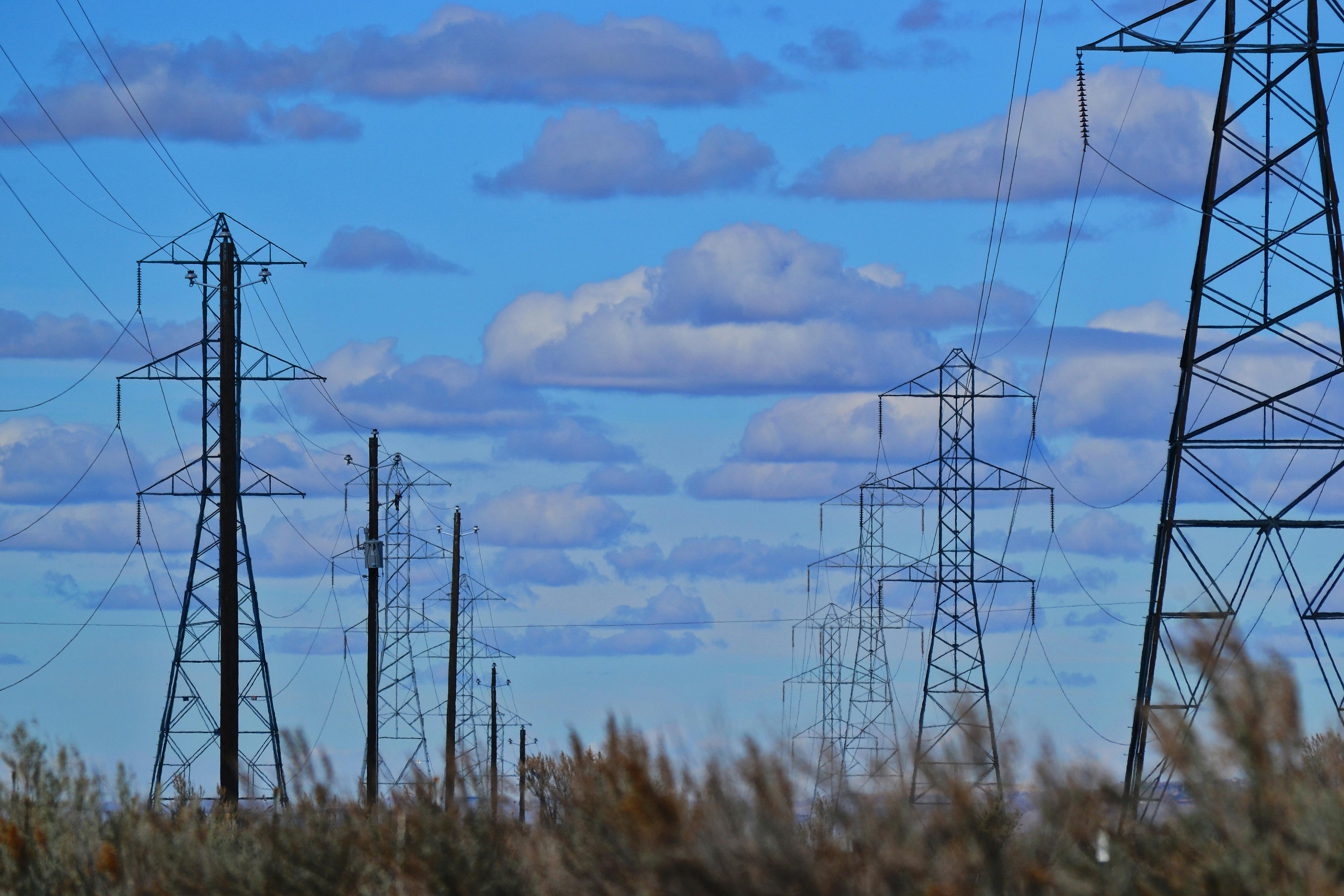
1.jpg "Energy M&A 2025-2026: Trends in AI & Data Center Power")
Energy M&A 2025-2026: AI Demand and the Rise of Dispatchable Power.
Energy-sector M&A activity in 2025 reached its highest level in more than a decade, exceeding $130 billion, signaling more than cyclical dealmaking. It reflects a structural reordering of the energy sector, driven by the collision of three defining forces:
- The AI-driven electricity demand shock reshaping power markets
- The pragmatic physics of the energy transition, elevating dispatchable capacity
- The deliberate use of scale as a durable competitive moat
As power-sector consolidation accelerates alongside selective hydrocarbon and infrastructure plays, strategy and corporate development teams must move beyond observation to active positioning. The implications are now crystallizing across generation, midstream, and industrial value chains.
I. The AI Power Demand Shock: Why Data Centers are Rewriting Investment Theses
The catalyst that rewrote the investment thesis almost overnight is data centers. This is not the gradual electrification of transport or heating that strategists have modeled for years, but a sudden, highly concentrated surge in demand driven by AI compute.
Goldman Sachs estimates this could add 160 GW of U.S. power demand by 2030 - equivalent to adding another Texas to the grid. This demand is neither speculative nor distant. Hyperscalers are already signing 15-year PPAs at premium prices for immediate capacity, fundamentally altering the risk-return calculus for generation assets.
Constellation’s pending $26.6 billion acquisition of Calpine makes strategic sense only through this lens. The transaction combines 32 GW of gas generation with 21 GW of nuclear, creating exactly the kind of high-capacity-factor, dispatchable portfolio that data centers require. This is not about renewable growth trajectories or long-dated decarbonization timelines; it is about cornering scarce, immediately deployable electrons in markets where wholesale power prices have structurally repriced upward.
NRG’s $12.5 billion acquisition of LS Power assets follows the same logic: acquire assets that can actually deliver power when and where hyperscalers need it.
The hyperscaler demand thesis gained further validation in December when Alphabet committed $4.75 billion to acquire Intersect Power, securing a development pipeline spanning solar, battery storage, and data-center-ready infrastructure. This marked a strategic shift from contracted offtake to direct ownership of generation assets, signaling tech capital’s willingness to move upstream when reliability and speed-to-market are paramount.
The strategic implications extend well beyond generation. Microsoft, Amazon, and Google are now direct counterparties in energy transactions, wielding purchasing power comparable to utilities. For energy companies, this creates a new customer class with longer time horizons, different risk tolerances, and a willingness to pay premiums for certainty.
Business development teams should be stress-testing a simple question: can our assets serve this segment - and if not, are we defensively positioned against those that can?
II. Why Natural Gas is Winning the Energy Bridge Debate
The 2025 deal flow effectively settled a strategic question that has paralyzed energy planning for years: what actually bridges intermittent renewables to a decarbonized grid?
The market’s answer, delivered through transaction valuations, is unambiguous. Natural gas wins by default, not because of green credentials, but because scalable alternatives do not yet exist.
Battery storage remains duration-constrained and capital-intensive. Green hydrogen is still a decade away from economic viability at grid scale. Small Modular Reactors, despite intense hype, remain commercially unproven.
When faced with the operational reality of keeping data centers and industrial facilities online 24/7, while integrating 40–50% renewable penetration, investors concluded that combined-cycle gas plants are the only technology that balances reliability, economics, and acceptable—if imperfect—emissions profiles.
This explains why gas-fired generation assets commanded premium multiples throughout 2025, despite ESG pressures. Vistra’s acquisitions illustrate the trend clearly. The company closed its $1.9 billion purchase of Lotus Infrastructure Partners in October, adding 1,600 MW of gas capacity, and followed with a $4.7 billion acquisition of Cogentrix Energy in early January 2026.
These transactions underscore sustained appetite for flexible, dispatchable generation, even as renewable capacity continues to expand.
The year also exposed a strategic misstep many companies made over the past decade: divesting thermal assets to appear “green,” while sacrificing optionality in power markets now defined by volatility and scarcity pricing. Companies that maintained integrated portfolios—thermal plus renewables—now control the optionality markets value most.
For corporate strategists, the lesson is uncomfortable but clear. The energy transition will be non-linear and technology-agnostic in practice, regardless of rhetoric. Portfolio decisions should prioritize operational flexibility and stress-case performance, not theoretical decarbonization pathways that assume technologies and infrastructure that do not yet exist.
III. Scale as a Strategy: The New Competitive Architecture in Energy
ADNOC and OMV’s $13.4 billion acquisition of Nova Chemicals, combined with Borouge and Borealis, creates a platform with 13.6 million tons of polyolefin capacity. In petrochemicals—where feedstock costs dominate economics and Chinese overcapacity has destroyed value for a decade—this scale delivers pricing power and cost advantages smaller producers cannot replicate.
This is not empire-building. It reflects a recognition that commodity businesses survive only with sufficient scale to:
- Secure advantaged feedstock access
- Spread fixed costs across large volumes
- Offer product breadth and supply reliability
- Fund decarbonization and circular-economy investments
The same logic explains Chevron’s $53 billion acquisition of Hess, which closed in July 2025 after arbitration hurdles. Guyana’s Stabroek Block is not just prolific acreage; it is one of the last major conventional oil developments with sub-$35 breakevens and multi-decade reserve life.
In a world of aging assets and limited access to low-cost barrels, Guyana provides the cash-flow anchor that sustains dividends while funding transition investments. Here, scale means securing legacy cash flows that finance the pivot to new energy.
Mid-cap consolidation reinforced this dynamic. Cygnet Energy’s C$1.4 billion acquisition of Kiwetinohk Energy exemplifies mounting pressure on sub-scale operators to consolidate or face margin compression.
For mid-cap companies, the implications are existential. The 2025 M&A wave shows that pure-play strategies in commoditized segments offer limited defensibility unless positioned in the lowest cost decile. Firms must choose: scale through M&A, move up-chain, or accept sale as the highest-value outcome. The middle ground increasingly destroys value.
IV. The Capital Reallocation That Changes Everything
Perhaps the most structurally significant development of 2025 was the scale of institutional capital flowing into energy infrastructure.
KKR and CPP’s $10 billion investment for a 45% stake in Sempra Infrastructure Partners, alongside La Caisse’s C$10 billion take-private of Innergex, signals a profound shift in who owns energy assets—and how they are managed.
Institutional capital brings 30–40-year horizons, inflation-protected return targets, and fiduciary mandates fundamentally different from public-market incentives. LNG terminals, pipelines, and regulated utilities are viewed as bond-like assets with embedded optionality.
This creates both opportunity and threat. Operating companies can unlock premium valuations through partnerships while retaining control. Developers gain patient capital for long-cycle projects public markets increasingly avoid.
The competitive threat arises when pensions compete directly for assets, pushing valuations beyond what strategic buyers can justify.
Business development teams need new frameworks. The question is no longer just “what is this asset worth to us?” but “what would a financial buyer pay—and how do we partner rather than compete?”
V. Strategic Imperatives for 2026 and Beyond
As the 2025 M&A wave resets competitive baselines, strategy teams entering 2026 face a narrower margin for error. The transactions completed over the past year make clear that markets are now embedding new assumptions around demand volatility, asset integration, and capital structure into valuations.
First, portfolios must be reassessed against volatility rather than steady-state demand assumptions.
The AI-driven data center buildout creates concentrated, location-specific demand that produces structural scarcity in select power markets. Assets with firm transmission access in PJM, ERCOT, and California ISO submarkets—particularly near data center corridors—now command durable scarcity rents. In contrast, merchant assets in oversupplied or peripheral markets face structural margin compression rather than cyclical weakness.
Second, integration has emerged as a core source of competitive advantage.
The premiums paid for assets such as Calpine and Nova Chemicals reflect the value of integrated platforms, not standalone assets. In power, integration across dispatchable and intermittent generation, coupled with retail or industrial customer exposure, enhances optionality. In petrochemicals, feedstock-to-product integration insulates margins in an increasingly commoditized environment.
Third, institutional capital must be treated as a strategic partner.
With infrastructure funds holding hundreds of billions in deployable capital, competing directly with financial buyers is often suboptimal. Partnership models—combining operational control with long-duration capital—offer liquidity, growth funding, and valuation uplift that public markets increasingly fail to provide.
VI. Outlook for 2026: Continuity with Intensifying Dynamics and Emerging Disruptors
The base case for 2026 is one of continuity rather than reversal. The forces that defined the 2025 M&A surge are expected to persist, though with rising constraints and selective disruption beneath the surface.
Expected Continuations
AI-Driven Demand as the Structuring Force
The data center buildout continues to reshape power market fundamentals, with consensus forecasts embedding 75–100 GW of incremental U.S. load by decade-end. Hyperscalers’ long-dated commitments support sustained premium pricing for firm capacity, reinforcing the strategic value of integrated nuclear-gas and gas-fired portfolios. The Constellation–Calpine transaction will serve as a key reference point for this thesis.
Institutional Capital Deployment Accelerates
Pension funds and infrastructure investors are expected to continue targeting long-duration, contracted energy assets. LNG export facilities, midstream infrastructure, and regulated utilities remain primary beneficiaries, with financial buyers increasingly prioritizing inflation linkage and duration over absolute return maximization.
Hydrocarbons Shift Toward Precision
Absent another Guyana-scale discovery, upstream consolidation is likely to moderate. Deal activity should focus on bolt-on transactions that enhance capital efficiency—deepwater tiebacks, Permian optimization, and gas positions linked to LNG economics—while maintaining free-cash-flow discipline.
Potential Surprises
Direct Tech Entry into Asset Ownership
Beyond structured offtake and minority stakes, a major hyperscaler could pursue controlling ownership of generation portfolios or selective utility assets to secure immediate, co-located capacity. Alphabet’s Intersect Power acquisition demonstrates the feasibility of this approach and signals deeper convergence between tech and energy capital.
Nuclear-Linked Transactions Gain Momentum
Increased confidence in life extensions, restarts, and early SMR commercialization—particularly when paired with dedicated data center load—could catalyze partnerships or acquisitions involving nuclear operators and tech-backed vehicles.
Hybrid Renewables Platforms Re-Emerge
While standalone intermittent capacity remains discounted, integrated renewable–gas or renewable–storage–gas platforms could attract renewed interest by addressing firming and interconnection constraints that limit development pipelines.
Regulatory and Macro Frictions
Heightened antitrust scrutiny, prolonged interconnection delays, or softer industrial demand could slow transaction momentum. In response, joint ventures and institutional dropdowns may become preferred structures to advance strategy while managing risk.
VII. Bellwether Transactions to Monitor in 2026
Several transactions crossing the 2025–2026 boundary warrant close attention, as their execution will provide real-time signals on valuation durability and regulatory tolerance.
- Constellation–Calpine ($26.6 billion)
A critical test of the integrated nuclear-gas thesis. Post-close performance, regulatory conditions, and the ability to monetize scarcity rents from hyperscaler offtake will determine whether premiums for firm capacity are justified. - ADNOC–OMV–Nova Chemicals ($13.4 billion)
A bellwether for scale-driven restructuring in petrochemicals. Execution outcomes will indicate whether sovereign-backed consolidation can sustain elevated multiples amid global overcapacity. - KKR / CPP stake in Sempra Infrastructure ($10 billion)
A benchmark for institutional appetite for large-scale energy infrastructure. Any valuation resets or structural concessions would signal tighter limits on financial buyer pricing. - Alphabet–Intersect Power ($4.75 billion)
An early indicator of tech capital’s willingness to move upstream into asset ownership. Follow-on transactions would accelerate convergence between digital infrastructure and energy markets. - Blackstone Infrastructure–TXNM Energy (pending)
A test case for private equity’s ability to underwrite regulated utility capex in a higher-rate environment.
|
Strategic Driver |
Deal |
Significance for 2025-2026 |
|
Data Center Power |
Constellation / Calpine |
Integrated nuclear/gas to provide "firm" capacity for AI. |
|
Hyperscaler Upstream |
Alphabet / Intersect Power |
Tech giants becoming energy asset owners to secure supply. |
|
Institutional Scale |
KKR / Sempra |
Proves the depth of the "private infrastructure" market. |
|
Hydrocarbon Moat |
Chevron / Hess |
Focus on "advantaged scale" and long-term cash flow security. |
|
Grid Reliability |
Blackstone / Hill Top |
Strategic acquisition of dispatchable gas assets for grid stability. |
Collectively, these transactions function as market diagnostics. Smooth execution would reinforce the structural premiums embedded in dispatchable power, contracted infrastructure, and advantaged scale. Friction or underperformance would suggest that the valuation peak reached in 2025 may be approaching its limits.
The Bottom Line
The 2025 M&A wave reflects an energy sector reshaped not by policy ambition, but by fundamental supply-demand imbalances, the physics of reliable power, and the economics of scale.
For strategy teams, success requires abandoning linear transition narratives and positioning for volatility, integration, and optionality. The companies that dominate the next decade will be those that master the paradox of serving legacy demand profitably while selectively building positions in successor technologies—on realistic timelines, not aspirational ones.







.jpg "US Refining Outlook 2026: Capacity Closures, Venezuelan Crude, and Crack Spread Forecasts")