The Great Petrochemical Shakeout: Why ExxonMobil's Singapore Closure Signals Years of Pain Ahead
On December 4, 2025, ExxonMobil announced plans to permanently close one of two steam crackers at its Singapore petrochemical complex by June 2026. Coming just days after a Bloomberg report warned that China's petrochemicals boom is escalating fears of a global glut, this closure crystallizes the existential crisis facing petrochemical producers worldwide.
This isn't just another plant closure - it's a symptom of a multi-year margin crisis that shows no signs of abating. Let me walk you through what's happening in the global petrochemical sector and why the next few years will fundamentally reshape the industry.
Recent News: The Week That Defined the Crisis
1. ExxonMobil Singapore Shutdown (December 4, 2025)
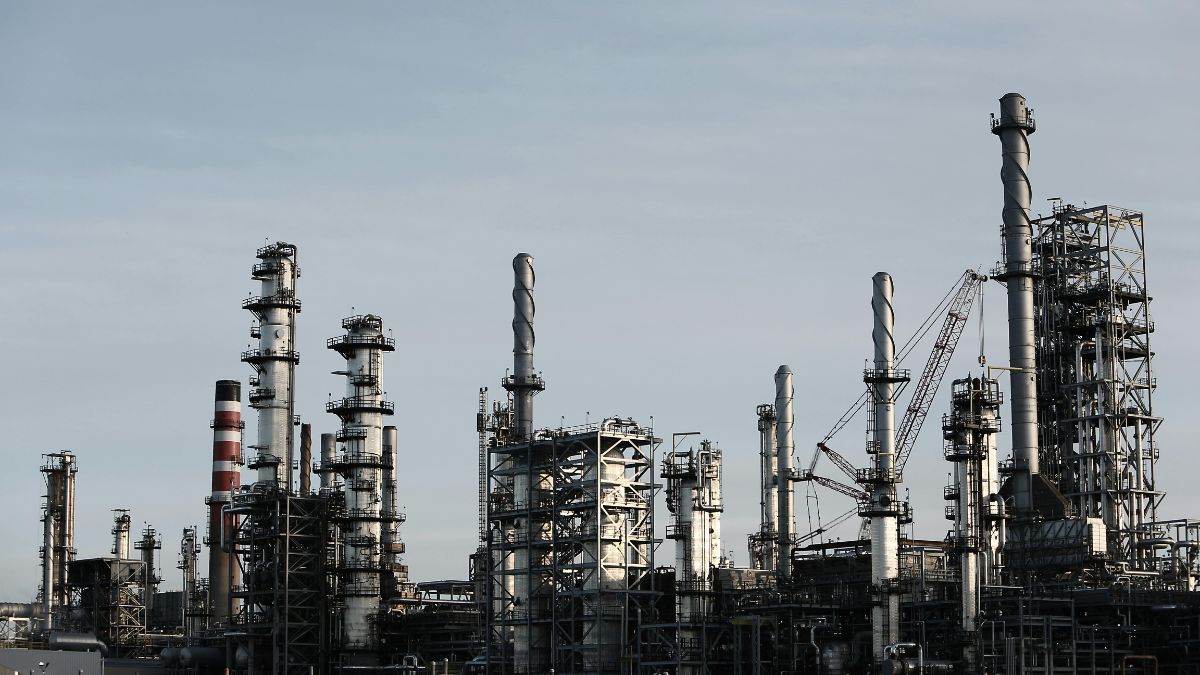
ExxonMobil plans to permanently shut down one of two steam crackers at its Singaporean refining and petrochemical complex. The facility, which has an ethylene production capacity of 1.9 million tonnes per year, represents a major Asian petrochemical hub. The closure of the older cracker, expected by June 2026, follows a pattern of rationalization across high-cost regions.
2. China's Capacity Surge Accelerates (December 3, 2025)
Just one day before the ExxonMobil announcement, Bloomberg reported that a wave of new Chinese petrochemical plants is raising fears of a deluge of exports that will put pressure on other producing nations already struggling with oversupply. According to the report, China's polyethylene production could add 18% this year based on forecasts, with output growth significantly exceeding expected demand growth at 10%, leading to a 13% decline in polyethylene imports.
The scale is staggering: China has built seven massive petrochemical hubs over the last decade, surpassing the US as the biggest producer of ethylene and polyethylene. While Beijing's aim was to increase self-sufficiency, the jump in capacity is creating a global glut that could swell even further if more planned plants come online.
3. U.S. Natural Gas Prices Hit 3-Year High (December 2025)
In related energy news, U.S. natural gas prices jumped to a three-year high as a polar vortex with freezing temperatures and snowstorms gripped most of the U.S., with the front-month futures price reaching $5.084 per MMBtu on Friday, driven by extreme cold and record LNG exports. This has made coal a cheaper power-generating fuel for utilities, which are set to run coal-fired generators harder this winter.
The natural gas price surge creates a double challenge for petrochemical producers: higher feedstock costs for gas-based crackers, and increased energy costs across all operations.
The Deeper Context: Why This Crisis Has Been Years in the Making
To understand why ExxonMobil's closure matters, we need to look at the fundamentals that have been deteriorating for years.
Three Years of Negative Margins
According to recent industry analysis from late 2025, Asian petrochemical producers have been operating in the red for years:
- Naphtha cracker margins in 2025: negative $158/ton (improved slightly from negative $170 in 2024 and negative $195 in 2023, but still deeply unprofitable)
- Propane cracker margins in 2025: negative $25/ton (occasionally turning positive for brief periods)
- Operating rates in Asia: averaging 81% year-to-date in 2025, down from 82% in 2024, with Q2 2025 dropping to just 79%
Industry experts note that polyethylene cash margins on an integrated basis have been largely negative since mid-2022, with ethylene margins for higher-cost producers remaining underwater throughout the past year.
The China Overcapacity Challenge
China is already the world's biggest producer of ethylene and polyethylene, after building seven petrochemical complexes over the past ten years, and is also the largest consumer of petrochemicals with imports last year hitting 15 million tons. However, as domestic production capacity grows, the market for other producers is shrinking, and they would need to find alternative buyers.
Industry forecasts from recent analysis suggest that Chinese ethylene plant operating rates will fall to 75-76% by 2027-2028 before any recovery begins toward the end of the decade. This represents a dramatic drop from the nearly 90% operating rates seen before the COVID-19 pandemic.
A recent industry report warned that approximately 24% of global ethylene production capacity is now at risk of closure as companies struggle with structural oversupply and collapsing profit margins.
Regional Breakdown: Who's Feeling the Pain
SG Southeast Asia: High-Cost Producers Exit
The ExxonMobil Singapore closure is part of a broader Southeast Asian retreat:
- Lotte Titan in Malaysia: offline for extended periods due to margin pressures
- JG Summit in the Philippines: shut down
- Lon Song Petrochemicals in Vietnam: closure announced
These facilities simply cannot compete with newer, more efficient crackers in China and the Middle East.
KR South Korea: Government-Mandated Restructuring
In August 2025, the South Korean government said that the 10 largest domestic companies have agreed to restructuring, including slashing their naphtha-cracking capacity by up to 25%. Recent developments include:
- HD Hyundai and Lotte Chemical spinning off and merging petrochemical operations
- A key cracker in Yeosu shut down in August due to margin concerns
- Three of South Korea's 14 crackers offline during Q4 2025
Industry observers suggest this marks the end of South Korea's era as a large-volume exporter of commodity chemicals and polymers.
Europe: Climate Compliance Accelerates Exit
EU European closures announced in 2023-2025 include:
- Ineos: Two units in Rheinberg, Germany; previous closures in Scotland and Belgium; mothballed facilities in France and Spain
- Dow: Ethylene cracker in Böhlen, Germany; chlor-alkali and vinyl assets in Schkopau, Germany; siloxanes plant in Barry, Britain
- TotalEnergies: Oldest steam cracker in Antwerp, Belgium (closure by end-2027)
According to industry analysis, over 11 million tons of capacity closures were announced in 2023-2024 across 21 sites, equivalent to 2-4% of the EU's chemical and polymer output. By end of 2027, Europe will have closed eight crackers representing over 4 million tons of capacity.
The European Story is Different: Unlike Asia, where margins are the primary driver, European closures stem largely from the need to meet net zero targets and the unsustainable investment required to upgrade aging infrastructure for climate compliance.
CN China: Even the Architect Faces Pain
Even China is feeling the pressure from its own overcapacity. PetroChina recently announced plans to permanently shut down 19 aging refining and chemical units as part of Beijing's campaign to curb overcapacity and boost profitability. This comes as China faces faster-than-expected peak fuel demand due to rapid electrification of transportation, compounding problems in a petrochemical sector already plagued by excess capacity.
US United States: The Feedstock Advantage Fades
The U.S. petrochemical industry enjoyed a golden era thanks to cheap shale gas, but the advantage is eroding:
- Natural gas liquids supply rose 95% from 2005 to 2025, but forecasts show only 12% growth over the next decade
- Ethane production expected to peak by the 2030s
- Major producers like LyondellBasell, Covestro, and Eastman Chemical reporting declining sales and earnings
The recent surge in natural gas prices to 3-year highs further pressures gas-based petrochemical economics, even as U.S. LNG exports boom.
The Subsidy War: How Government Support Distorts Markets
A July 2025 report revealed that in 2024, governments spent an estimated $80 billion in subsidies to sustain the plastics industry, with Saudi Arabia and China contributing approximately $59 billion—more than 75% of the total.
This massive government support has artificially prolonged the life of uneconomic capacity and distorted global markets, making it nearly impossible for higher-cost producers in Europe and parts of Asia to compete on a level playing field.
What's Driving the Perfect Storm?
The petrochemical crisis stems from several converging forces:
- Structural Overcapacity: China's massive buildout created far more capacity than global demand growth can absorb
- Sustained Negative Margins: Three-plus years of losses have exhausted balance sheets and shareholder patience
- Feedstock Cost Disadvantages: European crackers face high natural gas prices; Asian facilities rely on expensive naphtha; U.S. ethane advantage is plateauing
- Climate Compliance Costs: EU net zero targets require massive capital investments in aging infrastructure that operators cannot justify economically
- Aging Assets: Many facilities in Europe and parts of Asia were built decades ago and face both efficiency and environmental compliance challenges
- Demand Headwinds: China's faster-than-expected transportation electrification is reducing petrochemical feedstock demand growth
- Government Intervention: Massive subsidies in China and the Middle East allow producers to operate unprofitably, squeezing competitors
Industry Outlook: No Quick Fix
Market analysts expect the downcycle to persist through at least 2027-2028. According to industry forecasts, the world will have about 40 million metric tons more ethylene capacity than it needs by 2028, with global plant operating rates dropping to around 78% from nearly 90% pre-pandemic.
For the remainder of 2025 and into 2026, industry experts anticipate:
- No major market improvement: Seasonal patterns typically see weaker demand in H2 versus H1
- Continued margin pressure: Despite closures, the supply-demand imbalance remains severe
- More rationalization announcements: The 24% of at-risk capacity hasn't finished shaking out
- Geographic concentration: Production increasingly concentrated in China and the Middle East
Strategic Implications: Winners and Losers
The Winners:
- Low-cost producers with access to cheap feedstocks (Middle East, U.S. Gulf Coast in good times)
- Integrated players who can optimize across the value chain
- Companies with government backing to weather sustained losses (China, Saudi Arabia)
- Operators of newer, more efficient facilities
The Losers:
- High-cost European producers facing energy and compliance costs
- Aging Asian facilities without feedstock advantages (like ExxonMobil Singapore)
- Independent operators without deep pockets
- Regions dependent on naphtha cracking
The Bigger Picture: A New Global Order
This restructuring represents more than plant closures—it's about the fundamental reconfiguration of global petrochemical supply chains:
- Import Dependence: Europe is rapidly becoming import-dependent for basic chemicals, raising questions about industrial sovereignty
- Chinese Dominance: China is cementing its position as the world's petrochemical manufacturing center, controlling pricing power and trade flows
- Value Chain Shift: As commodity production moves to low-cost regions, advanced economies may focus on specialty chemicals
- Consolidation Wave: Expect continued M&A as companies seek scale and integration
- Sustainability Divide: Climate-driven costs will increasingly separate markets, with Europe becoming a high-cost, low-carbon island
Conclusion: Buckle Up
The ExxonMobil Singapore announcement last week is a symptom, not the disease. The global petrochemical industry is in the midst of a historic restructuring that will reshape the competitive landscape for the next decade.
With massive Chinese capacity still coming online, sustained negative margins across much of the industry, and operating rates forecast to remain depressed through 2027-2028, we're nowhere near the bottom. Industry veterans expect challenging conditions to persist for years, with only a gradual recovery toward the end of the decade.
For professionals in the sector—whether in operations, strategy, trading, or investment—the message is clear: this is a structural shift, not a cyclical dip. Companies that adapt by rationalizing portfolios, optimizing cost structures, pursuing integration advantages, and focusing on differentiated products will survive. Those that don't will join the growing list of casualties.
The industry that emerges from this crisis will look fundamentally different: more concentrated geographically, dominated by integrated giants and state-backed producers, with a clear divide between commodity producers in low-cost regions and specialty/sustainable producers in developed markets.
The only certainty? More closure announcements are coming.
What are your thoughts on this restructuring? Are we witnessing the end of petrochemical production in high-cost regions? How will this affect supply chain resilience and industrial policy? Share your perspectives in the comments.
About EnergyStrat Consulting
We help energy and petrochemical companies navigate market complexity with strategic insights and actionable intelligence. From portfolio optimization to market entry strategy, we turn industry disruption into competitive advantage.
Let's discuss your strategic challenges: contact@energystrat.consulting
Learn more: www.energystrat.consulting
Follow us for ongoing analysis of energy and chemical market trends
Found this valuable? Share with your network and let's continue the conversation.

.jpg "US Refining Outlook 2026: Capacity Closures, Venezuelan Crude, and Crack Spread Forecasts")