The global oil and gas industry is navigating a period of structural transformation driven by technological disruption, regulatory pressure, and shifting energy demand patterns. As we enter 2025, the sector faces a dual imperative: optimize legacy hydrocarbon assets while positioning for the energy transition. Companies that successfully execute across both dimensions will capture disproportionate value over the next three years.
Based on current market dynamics and capital allocation trends, five critical developments will define competitive advantage in the near term.
1. Digital Oilfield Maturation & AI-Driven Operations
The digital transformation of upstream and midstream operations is moving from pilot programs to scaled deployment. Industry leaders are now realizing measurable returns on digital investments made over the past five years.
Key developments through 2027:
- AI-powered predictive maintenance is reducing unplanned downtime by 20-35% at leading operators, translating to $15-25 million in annual savings per major asset
- Digital twin technology has matured beyond visualization to enable real-time optimization, with operators reporting 5-8% production increases from existing wells
- Cloud-based data integration is breaking down operational silos, enabling cross-asset analytics that were previously impossible
- Machine learning algorithms are now optimizing drilling parameters in real-time, reducing drilling time by 15-20% in complex formations
The competitive gap is widening: operators with mature digital capabilities are achieving 12-18% lower finding and development costs than industry averages. Companies still treating digitalization as an IT initiative rather than an operational transformation risk falling permanently behind the efficiency frontier.
- Business case—Shell's AI-powered predictive maintenance program: In partnership with C3.ai and Microsoft Azure, Shell deployed predictive maintenance across 10,000+ pieces of equipment globally. The program reduced unplanned downtime by 20% and cut maintenance costs by 15%, while scaling to monitor critical assets from upstream production facilities to LNG trains, demonstrating enterprise-wide digital transformation beyond pilot projects.
- Business case—BP's refining optimization: BP integrated AI-driven analytics across its refining operations, achieving a 20% increase in throughput efficiency and reducing maintenance-related disruptions by 25%. The system processes real-time data from thousands of sensors to optimize production parameters, contributing to emission reductions while improving operational margins.
- Strategic implication: Digital investment is no longer discretionary. The $2-4 billion annual digital spending by supermajors will likely accelerate as ROI evidence becomes undeniable.
2. Carbon Capture Scale-Up: From Pilots to Infrastructure
CCUS is transitioning from demonstration projects to commercial-scale infrastructure, driven by regulatory mandates, carbon pricing mechanisms, and corporate net-zero commitments. The investment cycle entering 2025 represents the sector's largest decarbonization capital deployment to date.
Market dynamics through 2027:
- Global CCUS capacity is projected to reach 400-450 million tonnes per annum by 2027, up from approximately 150 million tonnes in 2024
- Over $150 billion in CCUS projects are currently under development or in advanced planning stages
- The U.S. 45Q tax credit enhancement and EU carbon pricing above €80/tonne are creating viable economics for industrial-scale capture
- Major energy companies are pivoting from equity ownership to fee-based CCUS service models, de-risking capital exposure
Regional hotspots: The U.S. Gulf Coast, North Sea, and Middle East are emerging as CCUS hubs due to favorable geology, existing infrastructure, and policy support. Companies with acreage positions in CO₂ storage reservoirs are seeing material asset revaluations.
Critical challenge: Securing long-term offtake agreements remains the primary barrier to FID on large projects. First-movers are establishing competitive moats through hub-and-spoke infrastructure that creates natural monopolies in specific basins.
Business case—Saudi Aramco's Jubail CCUS Hub: Aramco, in partnership with SLB and Linde (60-20-20 equity split), is constructing one of the world's largest CCUS hubs in Jubail, targeting 9 million tonnes of CO₂ capture annually by 2027. The hub will capture 6 million tonnes from Aramco's gas processing plants plus 3 million tonnes from surrounding industrial emitters, with plans to scale to 44 million tonnes annually by 2035 as part of Saudi Arabia's national net-zero ambitions. The shared infrastructure model reduces individual investment risk while capturing economies of scale in transport and storage.
Business case—Shell's REFHYNE II green hydrogen with CCUS: Shell's 100-megawatt renewable hydrogen electrolyzer in Germany, operational by 2027, will produce 44,000 kilograms of green hydrogen daily to decarbonize refinery operations. Combined with the Polaris CCS project in Alberta (capturing 650,000 tonnes CO₂ annually), Shell is demonstrating integrated low-carbon infrastructure that addresses both industrial hydrogen demand and emissions sequestration, positioning for future carbon credit monetization.
3. Autonomous Operations & Robotics Deployment
Automation is addressing the industry's dual challenges of labor scarcity and operational risk in hazardous environments. The business case has strengthened as technology costs decline and labor premiums increase in key producing regions.
Adoption trajectory through 2027:
- Autonomous drilling rigs are expanding beyond offshore to onshore unconventional plays, with 15-20% of new U.S. land rigs expected to feature autonomous pipe handling by end-2026
- Drone-based inspection is becoming standard practice, reducing inspection costs by 40-60% while improving safety metrics
- Robotic process automation (RPA) in back-office functions is eliminating 25-35% of routine administrative work at leading operators
- Remote operations centers are enabling single teams to manage assets across multiple geographies, with Shell's Bangalore center now monitoring over 3,000 wells globally
The labor economics are compelling: a $15-20 million investment in rig automation generates $3-5 million in annual savings while reducing HSE incidents by 30-40%. Operators in tight labor markets (the Middle East, North America) are accelerating adoption to maintain production schedules.
Business case—Chevron's AI-driven autonomous drilling in the Permian: Chevron's deployment of AI-powered drilling systems in the Permian Basin has improved execution performance by over 80% since 2019, achieving a 30% increase in drilling speed and 25-50% reduction in drilling costs. The company now delivers twice as many wells per drilling rig compared to 2019 levels, with remote monitoring from Houston's Decision Support Center enabling real-time optimization 500 miles from field operations.
Business case—SLB's autonomous directional drilling system: SLB's AI-driven autonomous drilling achieved 85% autonomy in offshore operations, delivering a 25% increase in rate of penetration versus advisory mode and 48% improvement over manual operations. The system maintained superior well plan accuracy while requiring significantly fewer human interventions, demonstrating scalable economics for complex drilling environments.
Workforce implication: The industry will need to reskill 40,000+ workers by 2027 as operational roles shift from field-based to remote monitoring and data analysis.
4. Accelerated Renewable Integration & Portfolio Diversification
Traditional oil and gas companies are moving beyond rhetorical commitments to material capital reallocation toward lower-carbon energy sources. The strategic question has shifted from "whether" to "how much" and "how fast."
Capital allocation trends through 2027:
- European majors are targeting 15-25% of CAPEX toward renewables and new energies by 2027, up from 8-12% in 2024
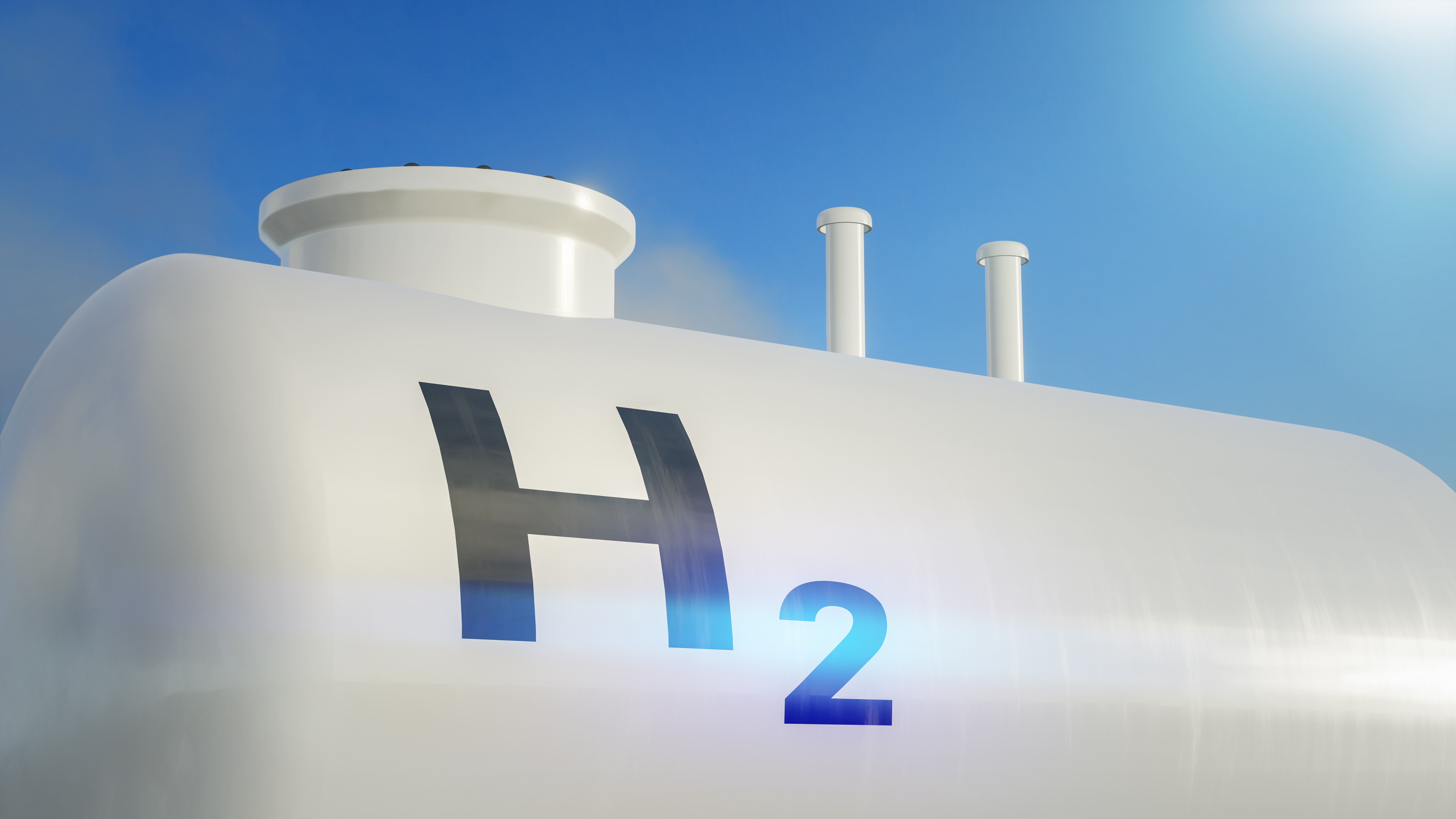
- Hydrogen economy buildout is accelerating, with 50+ GW of electrolyzer capacity under development globally
- Renewable natural gas (RNG) and sustainable aviation fuel (SAF) are emerging as near-term cash flow generators with premium pricing
- Strategic acquisitions of renewable developers have slowed as incumbents shift to organic project development and joint ventures
The divergence between U.S. and European strategies remains pronounced. U.S. independents are largely focused on hydrocarbon optimization with selective renewables exposure, while European IOCs are pursuing full-scale energy transition strategies. Asian NOCs are charting a middle path, maintaining hydrocarbon dominance while building adjacent clean energy platforms.
Business case—Shell's Holland Hydrogen I project: Shell's 200-megawatt green hydrogen facility in Rotterdam, Europe's largest upon completion, will supply industrial customers and support decarbonization of heavy industry sectors. The project represents Shell's pivot from passenger vehicle hydrogen (closing California stations) to large-scale industrial applications with secured offtake agreements, demonstrating capital reallocation toward commercially viable hydrogen segments.
Business case—TotalEnergies' Integrated Power strategy: TotalEnergies deployed $17.8 billion in 2024 capital, with growing allocation toward its differentiated Integrated Power model. Strategic acquisitions in Germany (Quadra Energy, VSB) and gas-fired flexible generation in the U.S. and UK position the company to produce over 50 TWh of power in 2025—equivalent to 10% of its hydrocarbon production. This integrated approach combines renewable generation with flexible gas capacity to address intermittency challenges.
Investment thesis: Companies with integrated energy portfolios will trade at premium multiples (1.5-2.0x EV/EBITDA spreads) versus pure-play hydrocarbon producers as investor preferences shift toward energy transition credibility.
5. LNG Export Surge & Natural Gas as Transition Fuel
The global LNG market is entering its most dynamic growth phase in two decades, fundamentally reshaping energy trade flows and geopolitical alignments. Natural gas is solidifying its role as the critical bridge fuel in the energy transition.
Market transformation through 2027:
- U.S. LNG exports are projected to reach 14.9 billion cubic feet per day in 2025, representing 25% year-over-year growth, with the U.S. maintaining its position as the world's largest LNG exporter
- Over 300 billion cubic meters per year of new global LNG capacity will come online between 2025-2030, the largest buildout wave in history
- Asia-Pacific demand growth continues to drive market expansion, with China and India accounting for 60% of incremental LNG import capacity
- European LNG imports have structurally increased following the reduction in Russian pipeline gas, creating sustained demand for flexible LNG supply
Strategic implications:
The LNG boom is creating distinct winners and losers. U.S. Gulf Coast developers with FID-ready projects are capturing premium valuations. Companies with long-term offtake agreements to Asian buyers are securing 15-20 year cash flow visibility. Conversely, pipeline-dependent gas producers without LNG market access face pricing pressure and stranded asset risk.
Geopolitical dimension: Energy security concerns are driving governments to prioritize indigenous LNG development and diversified supply sources. The U.S. is leveraging LNG exports as a foreign policy tool, particularly in Europe and Asia, while Qatar and Australia are expanding production to maintain market share.
Price dynamics: The global gas market is bifurcating, with LNG-linked prices trading at significant premiums to regional hub prices in markets with limited pipeline connectivity. This spread is creating arbitrage opportunities and incentivizing further infrastructure investment.
Business case—U.S. Gulf Coast LNG expansion wave: U.S. LNG export capacity is set to nearly double from 15.5 Bcf/d currently to over 30 Bcf/d by 2030, with major projects including Plaquemines (operational 2024-2025), Corpus Christi Stage 3, and Golden Pass collectively adding 25+ Bcf/d. This expansion represents over $100 billion in infrastructure investment and positions the U.S. to maintain its lead over Qatar and Australia, with exports reaching 14.9 Bcf/d in 2025—a 25% year-over-year increase. The U.S. became the first country to export 10 million tonnes of LNG in a single month (October 2025), demonstrating operational scale-up capability.
Business case—Qatar's North Field expansion program: QatarEnergy is executing an 85% capacity expansion from 77 million tonnes per annum to 142 million tonnes by 2030 through its North Field East, South, and West projects. The phased rollout (44 million tonnes by 2026, additional tranches by 2027 and 2030) leverages Qatar's position as the lowest-cost LNG producer with superior economics from associated liquids production. Long-term offtake agreements with Asian buyers, including a 27-year deal with Chinese importers, provide cash flow visibility while Qatar targets 23% of global LNG supply by 2030.
Strategic Imperatives for 2025-2027
The oil and gas sector's near-term evolution will be defined by execution capability across digital transformation, decarbonization infrastructure, operational automation, portfolio diversification, and LNG market positioning. Companies that achieve excellence across multiple trends simultaneously will establish defensible competitive advantages.
The strategic priorities are clear: scale digital capabilities to drive step-change efficiency gains, secure positions in emerging CCUS hubs before infrastructure lock-in occurs, accelerate automation to address labor constraints and safety imperatives, execute disciplined capital allocation across traditional and new energy investments, and capture value from the structural LNG market expansion.
Organizations that treat these trends as isolated initiatives rather than interconnected strategic imperatives will underperform. The winners through 2027 will be those that build integrated operating models capable of optimizing legacy assets while scaling new energy platforms—simultaneously managing the complexities of today's hydrocarbon business and tomorrow's diversified energy portfolio.


.jpg "US Refining Outlook 2026: Capacity Closures, Venezuelan Crude, and Crack Spread Forecasts")