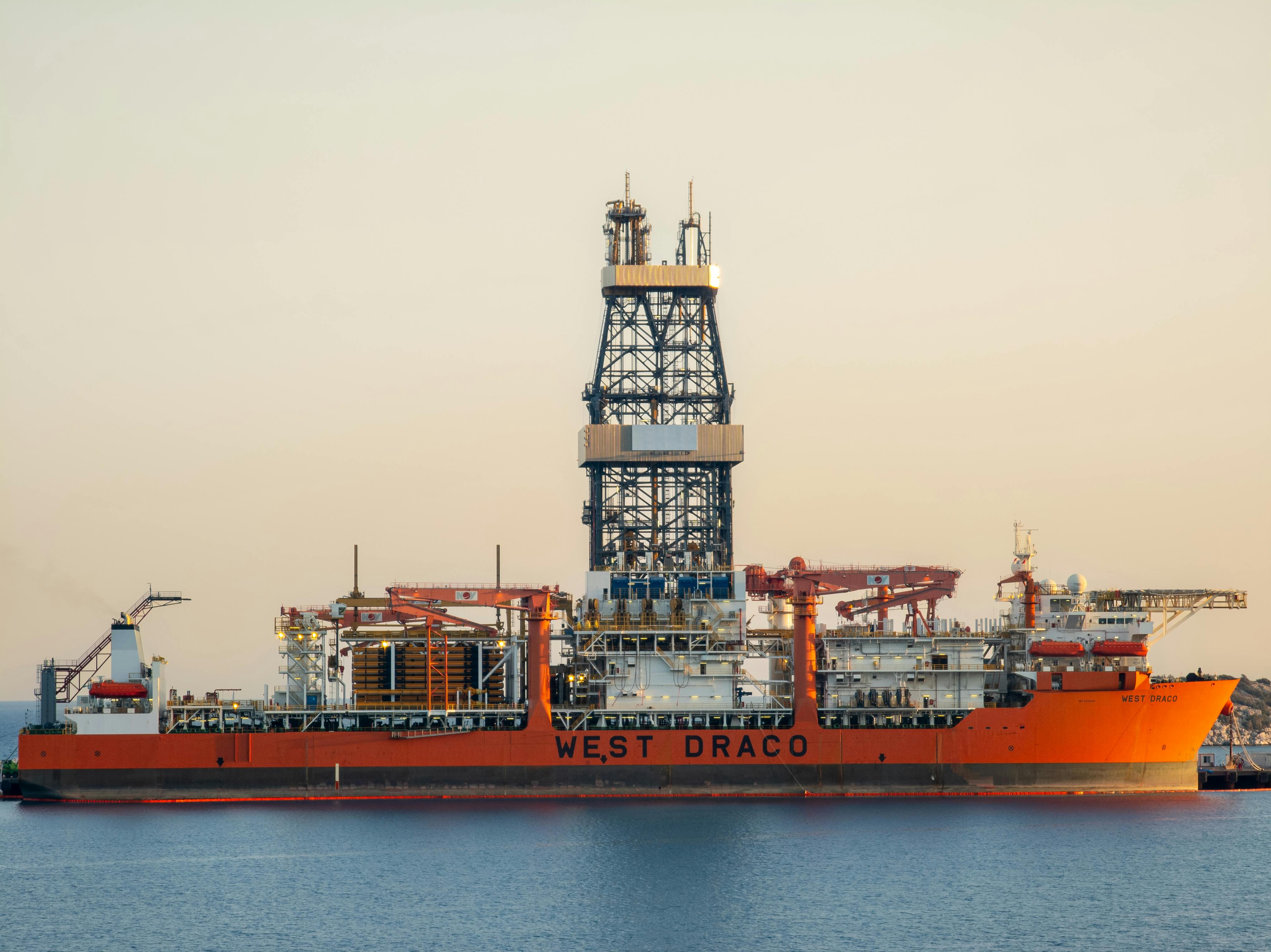
The Evolving FPSO Contractor Model: Implications for Offshore Development in Africa and Asia
The FPSO contractor landscape has undergone a fundamental commercial reset over the past five years. What began as a response to significant losses on fixed-price EPC contracts during the 2014–2020 downturn has matured into a structural repositioning — one in which leading contractors now operate less as project executors and more as long-term capital partners with defined portfolio strategies.
This shift has direct consequences for how and where offshore resources get developed. Nowhere is this more visible than in Africa and Asia, two regions that account for a disproportionate share of the next wave of deepwater investment decisions — and where the new contractor economics are already reshaping project timelines, commercial structures, and the distribution of value across the upstream chain.
From EPC Execution to Portfolio Management
The core of the business model change is straightforward: contractors have migrated from fixed-price construction contracts, which concentrated execution risk on their balance sheets, toward lease-and-operate structures that generate long-duration, asset-backed revenue streams. Lease-and-operate contracts covered approximately 72% of FPSO awards in 2024–2025, up from around 58% earlier in the decade. Under these arrangements, contractors finance construction and recover capital through 15–20 year day-rate commitments, reducing an operator's upfront outlay by $1–1.5 billion per unit while locking in predictable cash flows on the contractor side.
The commercial logic is reinforced by the behaviour of leading contractors. For example, SBM Offshore now explicitly structures its commercial offering around a menu of models - lease-and-operate, build-operate-transfer, sale-and-operate - designed to sustain diversified revenue across short and long-duration contracts. By Q3 2025, the company operated a fleet of 17 FPSOs with a combined capacity of 2.7 million barrels per day, with three units achieving first oil in 2025 alone, including FPSO Almirante Tamandaré, which became Brazil's highest-producing platform at approximately 270,000 barrels per day. These reflect a deliberate strategy to build a production infrastructure portfolio rather than a project backlog.
Similarly, MODEC has pursued a parallel path, embedding long-duration operations and maintenance commitments as a standard feature of its commercial proposition. Following its FEED win for Shell's Gato do Mato project in March 2024 and progression on ExxonMobil Guyana's Hammerhead FPSO toward full EPCI scope, the company's standardised hull programme has become as much a capital efficiency mechanism as an engineering one — enabling predictable cost curves across a managed asset base.
The practical outcome is that the top five contractors - SBM Offshore, MODEC, BW Offshore, Yinson, and Bumi Armada - collectively controlled roughly 60% of a global order book valued at approximately $48 billion as of mid-2025. These companies are allocating capital against defined risk-return thresholds. Projects that do not clear those thresholds do not attract credible bids, regardless of their geological merit.
The Operator Response: EPC as a Counterweight
Not all operators have accepted the lease model's value redistribution passively. Petrobras represents the most sustained attempt by a major operator to push back - shifting procurement toward EPC and build-operate-transfer structures that restore asset ownership and reduce long-term day-rate exposure.
The P-84 and P-85 contracts, awarded to Seatrium in May 2024 for approximately $8.15 billion, follow this logic. Both units - targeting 225,000 barrels per day each, to be deployed at the Atapu and Sépia fields in Brazil's Santos Basin - are EPC structures where Petrobras retains ownership, with construction spread across yards in Brazil, China, and Singapore and first oil targeted for 2029. The deal is a deliberate move to anchor long-term production capacity on Petrobras's own balance sheet rather than through external lease commitments.
But the limits of this approach have also been visible. On multiple occasions, complex FPSO tenders under EPC terms have returned few bids at prices substantially above operator expectations - and in the case of the Sergipe Águas Profundas process in 2022, a single bid at a price that led to cancellation. The market response was a clear signal: when contractor balance sheets are committed and yard capacity is constrained, competitive tension does not automatically materialise around operator-preferred commercial structures. Petrobras has since explored BOT arrangements - with a four-to-six year period between construction and asset transfer - as a middle ground, though the fundamental tension between operator capital discipline and contractor risk appetite remains unresolved.
Africa: The Commercial Architecture Problem
Africa's deepwater pipeline is technically compelling. The challenge is translating geological potential into commercially viable projects within a contractor economics framework that has become significantly more demanding.
Namibia’s Venus Discovery: A Case Study in Commercial Complexity
Namibia is the clearest current example. TotalEnergies' Venus discovery in Block 2913B — a confirmed light oil accumulation in approximately 3,000 metres of water, approximately 290 kilometres offshore, with expected production of 150,000 barrels per day — represents one of the most significant deepwater finds of the last decade. Engineering studies are advanced. Environmental and social impact assessment consultations commenced in April 2025. The development concept involves subsea wells tied back to a purpose-built FPSO, with subsea contract values alone estimated at $6–8 billion. FID is now targeted for mid-2026, with first oil projected between 2029 and 2030.
The repeated deferral of that FID — from 2025 to mid-2026 — is not primarily a technical issue. The Venus resource is confirmed, the development concept is settled, and TotalEnergies has deepened its position by acquiring additional working interest from Impact Oil and Gas. The delays reflect the complexity of constructing a viable commercial framework for a frontier basin: aligning FPSO contractor financing requirements, NOC participation structures (NAMCOR holds 10%), local content frameworks, and project economics in a water depth and location with no comparable regional precedent.
This is the central constraint for African deepwater development that is often underweighted in resource assessments. A large, technically viable discovery does not automatically translate into a sanctioned project. What translates is a commercial structure that satisfies the capital allocation criteria of a contractor community that is now selective about where it deploys long-term financing.
West Africa's established markets present a different but related dynamic. In Nigeria and Angola, the dominant challenge is no longer greenfield development but asset sustainability. The Agbami FPSO - where Africa Oil holds an indirect interest through OML 127 - is progressing compressor overhauls across all three units alongside preparation for a 2026 drilling campaign. Preowei, a potential subsea tieback to the Egina FPSO, remains under FEED study. These are brownfield decisions, and the contractors who hold operational knowledge of aging West African assets are increasingly central to whether production plateaus or declines.
The commercial implication is significant: the contractor's role in West Africa has shifted from project delivery to asset stewardship. Life extension decisions, emissions retrofit specifications, water injection management, and late-life operational strategies are not workstreams that lend themselves to competitive tender processes. They accrue to the contractor with institutional depth on the specific asset. That deepens the interdependency between operators and contractors in established basins — and gives incumbent contractors a structural advantage that is independent of market-level pricing dynamics.
Global Shipyard Constraints and Market Leverage
Asia's FPSO dynamic is defined less by commercial model evolution and more by a physical constraint that is reshaping the economics of the entire market: shipyard capacity.
The fabrication of FPSO hulls and topsides is geographically concentrated. South Korean yards - HD Hyundai Heavy Industries, Hanwha Ocean, Samsung Heavy Industries - retain dominant positions in technically complex, high-specification construction, with their LNG carrier capability underpinning offshore platform expertise. Chinese yards, led by CSSC's constituent shipbuilders including Shanghai Waigaoqiao Shipbuilding (which delivered SBM's FPSO Jaguar hull in November 2024) and Hudong-Zhonghua, have expanded aggressively and now account for approximately 70% of global new shipbuilding orders by volume. Singapore's Seatrium provides a critical topsides integration hub.
Each of these capacity centres is under sustained pressure. South Korean yards are operating at near-capacity to fulfil LNG carrier commitments through at least 2027, with Korea's LNG order backlog exceeding 200 units as of early 2026. Chinese yards are simultaneously pursuing LNG market share - including Hudong-Zhonghua's record order for 18 super-large LNG carriers from QatarEnergy in 2024 — while managing container ship and bulk carrier demand. The combined order backlog of Korean, Chinese, and Japanese shipbuilders stood at approximately 14.92 million CGT in late 2025, with per-yard backlogs at record levels despite a softening in new order activity.
The downstream effect on FPSO contractors is direct: securing a yard slot is a precondition for bidding on a project, not a subsequent procurement step. A contractor without secured fabrication capacity cannot offer an operator a credible schedule or price. This has effectively imposed a ceiling on how many FPSO projects can advance simultaneously, regardless of how many operators want to move forward.
The consequence is a structural elevation of contractor leverage. With yard access scarce, contractors can be selective - prioritising projects with stronger risk-adjusted returns, better-defined commercial frameworks, and operators with a track record of efficient execution collaboration. Projects in frontier markets with unresolved commercial structures face not just financing risk but access risk: the viable contractor pool for a project without a secured yard slot is genuinely thin.
Asian financial institutions have adapted to this reality by deepening engagement with FPSO lease structures as infrastructure-class assets. Banks, leasing arms, and export credit agencies across the region increasingly price these investments against long-duration cash flow profiles rather than upstream project risk — reinforcing the financial underpinning of the contractor-led model and, in doing so, further entrenching it.
Strategic Implications
The evolution of FPSO contractor model carries distinct implications across different stakeholder groups.
For IOCs and international operators, procurement strategy requires recalibration. Competitive tension in large FPSO tenders is no longer guaranteed, and the fixed-price EPC model - while still viable in specific contexts - increasingly generates either limited competition, pricing above budget, or both. The more productive orientation is toward earlier contractor engagement, shared risk frameworks, and commercial structures that give the contractor a viable return profile from the outset. TotalEnergies' approach on GranMorgu in Suriname — taking FID in October 2024 with SBM Offshore engaged as both engineering partner and long-term operator from early in the development cycle — reflects this logic.
For NOC leadership, the strategic challenge is sharper. National oil companies in frontier and emerging markets cannot assume that proven reserves will attract contractor interest on favourable terms. NAMCOR in Namibia, NNPC in Nigeria, and their counterparts across the continent are operating in an environment where commercial framework quality - the clarity of risk allocation, the bankability of the lease structure, the depth of NOC financial participation - is as determinative of project progression as the underlying resource. Developing that commercial capability is an institutional investment, not a procurement function.
For investors, the model shift reframes where risk sits and where value accretes across a deepwater project's life cycle. Under the lease model, a significant portion of traditional upstream execution risk has migrated to the contractor, who is now exposed to long-term operational performance, refinancing costs, and asset residual value. The major FPSO contractors increasingly resemble infrastructure companies operating inside the upstream value chain. Understanding that distinction - and its implications for return profiles, downside scenarios, and through-cycle resilience - is material to any substantive analysis of deepwater investment.
Conclusion
The FPSO market's structural shift is not a transitional phase between two stable states - it is a durable reconfiguration of how deepwater resources are monetised and who bears the commercial risk of doing so. Africa's development trajectory will be shaped as much by the alignment between project economics and contractor portfolio criteria as by the scale of its resource base. Asia's industrial constraints will continue to set a physical ceiling on the pace of global offshore expansion, independent of demand signals from operators.
For the full range of stakeholders in deepwater development - operators, NOCs, investors, and contractors themselves - the central question is no longer whether an offshore resource can be developed. It is whether the commercial architecture around it is capable of meeting the criteria of a contractor community that has permanently redefined the terms on which it will engage.
EnergyStrat | Upstream Strategy and Offshore Markets
For any further discussion, feel free to contact us: contact@energystrat.consulting




.jpg "US Refining Outlook 2026: Capacity Closures, Venezuelan Crude, and Crack Spread Forecasts")