The New Economics of FPSOs:
Can Costs, Carbon, and Capacity Coexist?
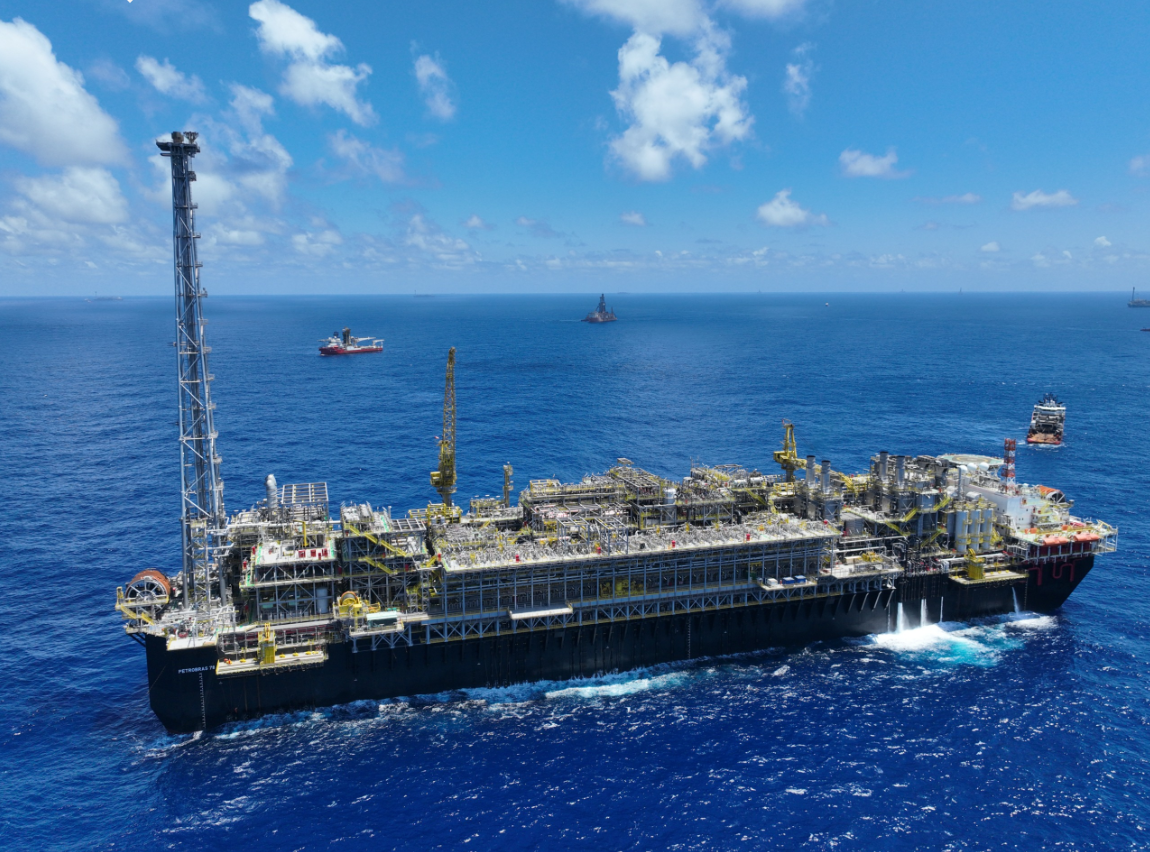
Floating production systems (FPSOs) are the backbone of deepwater oil development. But a tightening vise of capital expenditure inflation, carbon accountability, and contractor-operator friction is forcing a hard question: is the FPSO business model still fit for the next decade of offshore production? 
01
The capex spiral meets oil price volatility
When oil majors and NOCs greenlit the current wave of deepwater FPSOs between 2020 and 2023, many did so on the back of $70–80/bbl price assumptions and a post-COVID rebound in contractor capacity. Both assumptions have proven shaky. Brent crude has oscillated between $68 and $92 per barrel since 2023, while FPSO engineering, procurement, and construction costs have climbed relentlessly — driven by steel prices, labour shortages in Asian yards, and supply-chain fragmentation that the industry still hasn't resolved.
The numbers are stark. A mid-sized FPSO with 150,000–200,000 bpd capacity that might have been budgeted at $2.2B in 2018 now carries a $3.5B–4.2B price tag. That 60–90% cost escalation compresses project economics dramatically at sub-$75 oil.
Analysis of major deepwater developments confirms that capital discipline is the primary determinant of project viability. Historical industry trends show that a standard 20% cost overrun typically inflates breakeven prices enough to push a marginal project from viable to uninvestable, even if oil price assumptions remain stable. For these high-CAPEX assets, execution risk is often a greater threat to returns than market volatility.
EnergyStrat analysis
For large-scale deepwater assets with multi-billion dollar CAPEX, even a 10% shift in EPC costs can significantly erode project IRR. Given the long production lives of these facilities, such overruns often mean the difference between a project clearing its required hurdle rate or failing to meet investor expectations. With global supply chain inflation and tighter capital markets, the tolerance for execution errors in the offshore sector is at its lowest point in years.
Context: Strait of Hormuz crisis, March–April 2026
The closure of the Strait of Hormuz briefly sent Brent above $115/bbl — the highest in over four years. It would be tempting to read this as relief for FPSO project economics. It is not. A crisis-driven spike is precisely the kind of volatility that long-dated capital decisions must be stress-tested against, not built upon. FPSOs commissioned today will still be producing in 2045. The planning assumption that matters is what oil is worth when the crisis resolves — and $70/bbl remains a credible base case once Middle East supply gradually resumes. The Hormuz episode is best read as a vivid demonstration of why price volatility is the central risk in this asset class.
Operators have responded with a range of strategies: longer front-end engineering phases to lock costs before final investment decision (FID), increased use of standardised FPSO hull designs, and — increasingly — redeployment of existing units rather than ordering newbuilds. The second-hand FPSO market has tightened considerably as a result, with day-rate premiums for available tonnage reaching decade highs in 2025.
02
The Atlantic Basin premium: a durable structural shift
One consequence of the Hormuz crisis that does carry durable weight for FPSO strategy is the revaluation of non-Gulf supply. With over 12 million barrels per day of crude effectively taken off the market during March and April 2026, buyers across Europe, Asia, and Latin America scrambled for Atlantic Basin alternatives. Brazilian pre-salt barrels, Guyanese Stabroek output, and West African cargoes — all produced via FPSO — commanded material premiums almost overnight.
This is not a new thesis, but the crisis has given it urgency. Energy security policy, which had been gradually shifting toward diversification away from Hormuz-exposed supply since 2022, has now moved decisively. Long-term offtake appetite for Atlantic deepwater crude has strengthened, and FID timelines on the next wave of FPSO projects in Brazil and Guyana are likely to accelerate as a result. The strategic case for investing in non-Gulf deepwater floating production has rarely been clearer.
The important caveat is that this strategic premium does not eliminate the underlying economics problem. A project sanctioned on the basis of $100+ oil driven by a geopolitical crisis will struggle when normalcy returns. The right response is to treat the Atlantic Basin supply security argument as a structural floor on demand for these barrels — while continuing to apply conservative oil price assumptions in the financial model.
03
Carbon cost pressures: Scope 1 & 2 offshore
Carbon accountability has arrived in deepwater. While offshore Scope 1 and 2 emissions once sat at the margins of FPSO project evaluation, they now routinely appear in FID approval criteria, lender covenants, and — in some jurisdictions — direct regulatory charges. The Norwegian carbon tax, which applies broadly to offshore operations on the NCS, has become a template that regulators in Brazil, the UK, and increasingly West African nations are studying closely.
The emissions footprint of a modern FPSO is substantial. A large production vessel consuming 50–70 MW of power — predominantly from gas turbines burning associated gas — can emit 200,000–400,000 tonnes of CO₂ per year. At a $25/tonne carbon cost over a 20-year asset life, that is a $100M–200M net present cost that simply didn't feature in project economics a decade ago. The IEA's upstream emissions tracking data confirms that floating production assets in the Atlantic Basin average 17–28 kgCO₂e/boe — a range wide enough to make the difference between a financeable project and one that fails lender screening.
|
Emissions source |
Mitigation pathway |
Capex impact |
Readiness |
|
Power generation (gas turbines) |
Shore power / electrification |
+$150M–300M |
Selective |
|
Flaring & venting |
Zero-routine-flaring design |
+$40M–80M |
Proven |
|
Diesel aux. engines |
Battery hybrid / LNG fuel |
+$30M–60M |
Proven |
|
Process heating |
Heat integration / electrification |
+$50M–120M |
Emerging |
|
|
|
|
|
|
Methane slip |
Enhanced leak detection (LDAR) |
+$5M–15M |
Proven |
Capex ranges based on EnergyStrat project database. IEA emissions intensity data: World Energy Outlook 2025 upstream supply dataset.
Carbon framing in a high-price environment
At $100+ oil, the incremental capex cost of decarbonisation features becomes a smaller share of project NPV, and the investment case momentarily looks easier to close. But carbon strategy must be built on regulatory inevitability, not oil price windfalls. The $70/bbl scenario that stress-tests FPSO returns also stress-tests the business case for carbon abatement capex. Operators who invest in emissions reduction only when oil prices give them headroom will find themselves non-compliant precisely when margins are tightest. The durable argument for carbon investment on FPSOs is lender requirements and regulatory trajectory — not the current price environment.
The tension is acute: every meaningful decarbonisation measure adds capex to a project already under cost pressure. Electrification from shore — the gold standard for Norwegian NCS operations — simply isn't available 300 kilometres offshore Guyana or in Block 0 off Angola. Operators must make choices between carbon cost liabilities and upfront capital deployment against a regulatory backdrop that remains uncertain beyond 2030 in most jurisdictions.
04
Contractor margins vs. operator expectations
The structural tension between FPSO contractors and operators has intensified with each cycle. Following the prolonged 2015–2020 downturn, major contractors — SBM Offshore, MODEC, BW Offshore, and Yinson among them — rebuilt their businesses on leasing models (FPSO-as-a-service) that shifted risk allocation and improved their own balance sheet resilience. Operators, under shareholder pressure to reduce capital commitment, initially embraced this. The unintended consequence is that it also reduced operator leverage.
Contractors today are selective. With shipyard capacity constrained in South Korea, China, and Singapore, and module fabrication yards in Norway and the Gulf Coast fully committed, EPC contractors can and do walk away from projects where margins don't compensate for execution risk. The era of operators dictating terms through competitive tender has given way to a market where two or three credible bidders often decline to submit unless commercial terms are pre-negotiated to a degree that would have seemed extraordinary in 2012.
The shift from lump-sum EPC to hybrid lease-and-operate contracts has fundamentally changed who bears cost overrun risk — and who benefits from efficiency gains. Neither party has fully internalised what the new equilibrium looks like.
Day rates for leased FPSOs on new contracts in 2024–2025 were regularly at $300,000–400,000 per day. Charter rates at this level generate acceptable returns for contractors who built units at lower historical costs, but create significant ongoing opex burden for operators — particularly in a low-oil-price environment. SBM Offshore's own FY2025 results confirmed project breakeven oil prices of $20–35/bbl on its leased fleet, illustrating just how wide the gap has become between contractor economics and the price environment operators must plan around. The mismatch between the long-dated nature of FPSO leases (typically 15–25 years) and the shorter planning horizons of operators focused on energy transition commitments has become a structural source of friction.
Case references: Three theatres, three tensions
Brazil · Pre-Salt
Petrobras & the P-series: scale vs. schedule
Petrobras's own investor guidance requires E&P projects to be NPV-positive at $45/bbl, with an average pre-salt breakeven near $25/bbl — a cost position built on scale, reservoir quality, and decades of operational learning. The Hormuz crisis has materially increased international demand for Brazilian barrels, reinforcing the case for accelerating the next tranche of FPSOs at Búzios and beyond. Yet even with that tailwind, delivery delays and local content obligations remain structural constraints on how fast the fleet can grow.
Guyana · Stabroek Block
ExxonMobil JV: speed-to-market under scrutiny
The Stabroek JV's reported ~$35/bbl breakeven has made Guyana a poster child for fast-tracked deepwater FPSO development. The Hormuz crisis has thrust Guyanese barrels firmly into the global supply security conversation. But the low headline breakeven masks a carbon cost tail not yet priced into Guyanese fiscal terms — and that political gap is closing faster now that the world is watching Atlantic Basin producers with new intensity.
West Africa · Nigeria & Angola
Marginal economics and the aging fleet
West Africa hosts one of the world's largest concentrations of operating FPSOs — many now 15–20 years old. The supply security premium from the Hormuz crisis has temporarily improved the economics of life extension decisions on marginal West African assets. But the structural challenge remains: aging topsides, tightening inspection regimes, and the near-impossibility of retrofitting meaningful carbon abatement onto 1990s-era designs. The crisis buys time; it does not resolve the investment question.
05
Can the triangle be resolved?
The three pressures — rising capex, carbon liability, and contractor-operator friction — are not entirely separable. Cost inflation partly reflects the additional engineering required to meet evolving emissions standards. Contractor selectivity partly reflects the execution risk embedded in complex, emissions-optimised topsides. And carbon uncertainty compounds the difficulty of long-dated financial modelling that underpins investment decisions.
Structural responses are emerging. Modular FPSO design — where power and utility modules are standardised across projects — can reduce both cost and emissions intensity by enabling pre-tested low-carbon power systems. Digital twin integration is improving energy management on operating FPSOs, with real-time fuel optimisation reducing Scope 1 intensity by 5–12% in documented operator cases. And collaborative contracting models, where operators and contractors share cost savings and overruns symmetrically, are showing early promise in reducing adversarial tension at the FID stage.
But the fundamental arithmetic remains demanding. At $75/bbl — the planning scenario that survives a Hormuz crisis resolution — a $3.8B FPSO project needs strong reservoir performance, controlled opex, and a stable carbon cost environment to generate the 12–15% IRR that institutional investors require. Any one of a volatile oil price, a significant cost overrun, or an unexpected carbon levy can shift a project from value-creating to value-destructive within a single budget cycle.
EnergyStrat view
The Hormuz crisis of early 2026 has done something useful for the FPSO industry: it has reminded the world that Atlantic Basin deepwater production is not just an economic asset but a strategic one as well. The supply security premium on non-Gulf barrels is real, and it will outlast the immediate crisis. That is a durable tailwind for the next wave of investment in Brazil, Guyana, and West Africa.
But it would be a serious mistake to use a geopolitical price spike as the foundation for investment decisions in an asset class with 20-year horizons. The planning discipline that separates the best FPSO operators from the rest — building projects that work at $70/bbl, not $100/bbl — is more important now, not less. The crisis has changed the strategic context; it has not changed the economics.
Sources: Petrobras Strategic Plan 2025–2029 investor presentation; SBM Offshore FY2025 annual results; IEA World Energy Outlook 2025 upstream supply dataset; IEA Oil Market Report March 2026; EIA Short-Term Energy Outlook April 2026; EnergyStrat project-level FPSO modelling database.
EnergyStrat provides independent analysis on upstream oil & gas economics, energy transition strategy, and offshore project finance.
Send us your comments: contact@energystrat.consulting




.jpg "US Refining Outlook 2026: Capacity Closures, Venezuelan Crude, and Crack Spread Forecasts")