The New Order of Risk in Global LNG
A drone strike on Ras Laffan did not just damage gas infrastructure. It shattered a twenty-year assumption about how global LNG risk is priced, structured, and managed. The framework we use to evaluate projects must now be rebuilt from first principles.
For most of its modern history, the LNG industry operated on a comforting premise: that risk was primarily financial. Sovereign creditworthiness, offtake contract structures, technology reliability, leverage ratios — these were the variables that determined whether a project succeeded or failed. Geopolitical risk was real, but it was largely contained to the project development phase. Once gas flowed, it flowed.
That premise is now broken. And the industry — developers, EPC contractors, equipment suppliers, investors, and off-takers alike — has not yet fully reckoned with what replaces it.
The Incident That Repriced Everything
The Iranian drone strikes on Ras Laffan and Mesaieed Industrial City in early 2026 were not, in isolation, the most destructive act in the history of energy infrastructure. The physical damage — twelve million tonnes per annum of capacity confirmed offline, the North Field Expansion timeline pushed back three to five years — was severe but not existential for Qatar’s LNG industry.
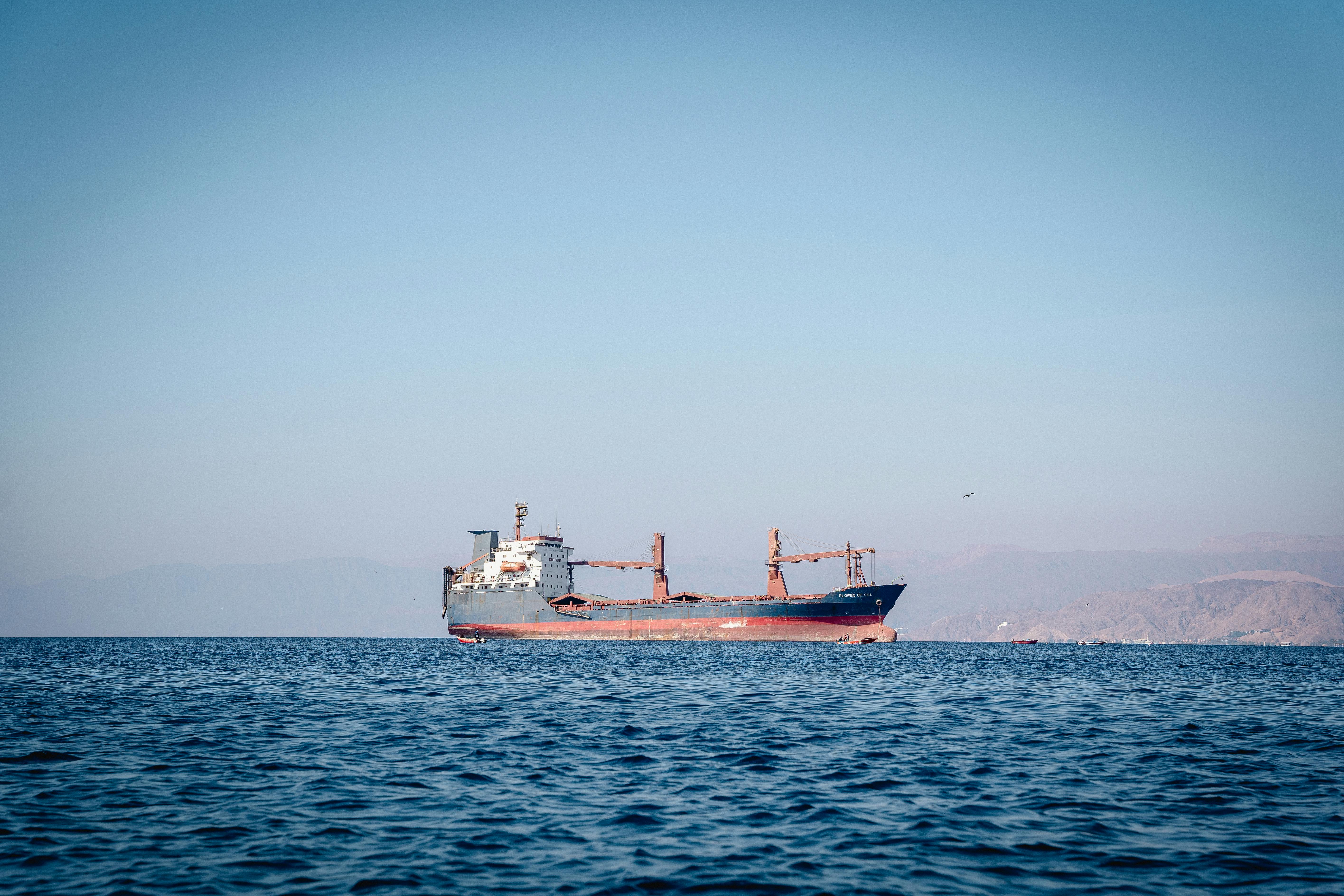
What made the strikes categorically different was what they revealed: that the world’s most critical LNG export node, responsible for roughly a fifth of global liquefied natural gas supply, is serviced by a single maritime chokepoint that can be effectively closed in an afternoon.
|
|
The Strait of Hormuz is not a risk factor. It is the risk factor. Every tonne of Qatari LNG that has ever been contracted, financed, and delivered has passed through a waterway thirty-three kilometres wide at its narrowest point. |
|
For two decades, that vulnerability was acknowledged in footnotes and risk registers, then effectively discounted by the market. Project finance banks lent billions against Qatari cash flows. Offtakers signed twenty-year Sale and Purchase Agreements. The implicit assumption was that the geopolitical stability of the Gulf — underwritten by mutual economic interest in keeping gas flowing — was sufficiently robust to render the Hormuz chokepoint a theoretical risk rather than an operational one.
The strikes ended that assumption. Not because Hormuz is now closed — it is not — but because the market now knows it can be closed. The option has been exercised, even if partially. And options, once exercised, are repriced permanently.
|
~20% of global LNG supply transiting Hormuz |
12 Mtpa Qatari capacity confirmed offline |
3–5 yrs estimated NFE/NFS expansion delay |
A Framework Built for the Wrong World
The standard LNG risk framework - the one that has governed project finance, credit ratings, and investment decisions for the past thirty years - was built around ten pillars: revenue risk, supply risk, operational risk, completion risk, debt structure, counterparty quality, financial resilience, macro and market risk, country and political risk, and ESG. It is a sound framework. It is also, in its current form, insufficient.
The insufficiency is structural, not incidental. The framework scores each pillar independently and aggregates them into an overall risk rating. But the Gulf crisis has demonstrated that certain risks are not additive — they are multiplicative. A project that scores well on nine of ten pillars but sits downstream of a single-point maritime chokepoint does not deserve a blended score that averages out the chokepoint exposure. It deserves a veto.
|
THE MISSING PILLAR No standard LNG risk framework carries an explicit pillar for physical security of export infrastructure — the resilience of the pipeline, liquefaction plant, marine terminal, and shipping route to deliberate physical disruption. This is no longer an acceptable omission. It must become Pillar 11. |
The ten existing pillars need not be discarded. Revenue risk, counterparty quality, and debt structure remain analytically essential. But they must now be applied within a new hierarchy — one in which physical infrastructure security and supply route independence function as threshold conditions rather than contributory variables. A project that fails either threshold does not graduate to the ten-pillar assessment. It is declined at the gate.
The New Hierarchy of Risk
What emerges from a rigorous reassessment of the seven major LNG projects currently under development is a new order of risk — one that upends several longstanding assumptions about which projects are safe, which are speculative, and which are uninvestable.
Tier 1 Has Become Provisional
Qatar’s North Field Expansion was, until this year, the uncontested benchmark for LNG project safety. Sovereign-backed. Fully contracted. World’s lowest-cost producer at four to five dollars per million British thermal units. AA-rated sovereign counterparty. Fixed-fee, capacity-based Sale and Purchase Agreements with the world’s largest utilities and trading companies. By every conventional measure, it was as close to risk-free as a major energy infrastructure project can be.
That characterisation remains partially true. The underlying economics of the North Field have not changed. The sovereign guarantee has not been withdrawn. But the project’s Transportation Capacity score — previously rated Very Strong, a score of 1 on a five-point scale — must now be reassessed to Moderate, a score of 3. Its Operational Risk score moves from Strong to Weaker. Its Country and Political Risk score, previously 1, moves to 3. Its Completion Risk, given NFE/NFS timeline disruption, deteriorates from Strong to Weaker.
The aggregate effect is a Tier 1 project that can no longer be rated Tier 1. Qatar NFE/NFS remains one of the world’s most important LNG projects. It is no longer one of the world’s lowest-risk ones.
The American Inversion
The most consequential — and counterintuitive — implication of the Gulf crisis is the structural re-rating of United States Gulf Coast LNG projects from their previous characterisation as high-cost, merchant-exposed, Tier 2 to Tier 3 platforms, toward something closer to the strategic assets they have now become.
Port Arthur LNG. Plaquemines. CP2. Rio Grande. These projects export through the Gulf of Mexico. They have no Hormuz exposure. Their supply route — across the Atlantic to European terminals, through the Panama Canal to Asian buyers — is geopolitically diversified in a way that no Middle Eastern project can match. Their gas source — the Permian Basin, the Haynesville Shale, the interconnected US pipeline grid — is onshore, domestic, and effectively immune to the kind of infrastructure strike that shut down Ras Laffan.
|
THE STRUCTURAL ADVANTAGE US Gulf Coast LNG projects do not have better economics than Qatar. What they have — and what now commands a premium — is supply route independence. In a world where Hormuz can be threatened, that is not a nice-to-have. It is the asset. |
This does not mean that CP2 or Rio Grande are without risk. Merchant capacity exposure remains a genuine concern. Completion risk for first-time developers is real. High-yield mini-perm financing structures carry refinancing vulnerability. But the framework must now weight supply route independence as a dominant variable — one that can elevate a project’s effective tier even when other scores are moderate.
The Uninvestable Remain Uninvestable — and More So
Arctic LNG 2 was already rated Very High Risk before the Gulf crisis. Western sanctions had disrupted offtake contracts, frozen financial assets, blocked access to Western technology and spare parts, and rendered the project’s logistics effectively inoperable. The Gulf crisis does not directly affect Arctic LNG 2’s risk profile. But it does change the context. At a moment when global energy security is under acute pressure, the appetite of Western governments to tolerate engagement with sanctioned Russian infrastructure has not increased. It has hardened.
For Indian offtakers — state-owned enterprises subject to Western capital market access and banking relationships — the secondary sanctions risk of engaging with Arctic LNG 2 is not a theoretical concern. It is a career-ending and institution-threatening one.
Mozambique occupies a different category. The gas resource is world-class. TotalEnergies is an experienced operator. The project was fully contracted before the force majeure declaration in 2021. But five years of insurgency in Cabo Delgado have not produced a resolution. For an Indian PSU seeking baseload supply for the 2030s, Mozambique is a watch-and-wait — not a commitment.
Who Needs to Change, and How
The new order of risk has different implications for each class of market participant. The framework is universal — every party should run the same ten-pillar assessment before making any engagement decision. But the lens through which those scores are interpreted is role-specific.
|
Stakeholder |
Implication of the New Order of Risk |
|
Developers & Sponsors |
The strategic imperative has shifted from contracting speed to route resilience. Projects in jurisdictions with single-chokepoint exposure now face a structurally higher cost of capital. Developers of Gulf-adjacent projects should expect more rigorous scrutiny on Transportation Capacity, force majeure carve-outs, and infrastructure resilience clauses in future SPA negotiations. |
|
EPC Contractors |
Fixed-price EPC contracts on projects with sovereign or sanctions risk now carry embedded exposure that was not priced in legacy structures. Country and political risk is not just a developer problem — it is a contractor liability. EPC firms need their own pillar-level assessment process before committing to Tier 3 or Tier 4 environments. |
|
OEM & Equipment |
The order risk for equipment suppliers is concentrated in Completion Risk and Debt Structure. Projects that have not reached Final Investment Decision, or that rely on high-yield mini-perm financing, carry genuine equipment cancellation risk. OEMs should require FID confirmation and financing close before committing production slots on long-lead items. |
|
Investors & Lenders |
Debt Service Coverage Ratios calculated against pre-crisis Qatar assumptions are now understated risk metrics. Lenders need to rerun stress scenarios with updated Transportation Capacity scores, revised force majeure probability distributions, and extended construction timeline assumptions. Projects that barely cleared DSCR thresholds in base-case models may not clear them under the revised downside. |
|
Indian Offtakers |
India’s energy security calculus has been fundamentally altered. Approximately eighty percent of India’s energy imports transit the Gulf. A market comfortable with heavy Qatari exposure must now build in supply route diversification as a non-negotiable portfolio constraint. Port Arthur and its US Gulf Coast peers have moved from commercially attractive to strategically essential. |
The Question That Matters Most
The deeper provocation — the one that the industry has not yet confronted directly — is whether the existing project finance and SPA structures are adequate for the risk environment that now exists.
Sale and Purchase Agreements are long-term instruments. A twenty-year SPA signed today will govern deliveries through 2046. The force majeure clauses in most standard SPAs were drafted for weather events, equipment failure, and upstream reservoir underperformance. They were not drafted for a world in which a nation-state can disable twelve million tonnes of annual LNG capacity and then negotiate from that position of demonstrated capability.
|
|
The question is not whether Qatar will rebuild. It will. The question is what the market will demand in exchange for accepting Hormuz-route LNG on the same terms as pre-crisis deliveries. The answer, almost certainly, is a risk premium. The size of that premium will define the next decade of LNG pricing. |
|
Similarly, the covenants in project finance debt structures were written against risk matrices that assigned very low probability to the simultaneous impairment of Transportation Capacity, Operational Risk, and Country Risk scores. The Gulf crisis has shown that these risks are correlated — a single geopolitical event can move all three simultaneously. Lenders who modelled them as independent variables have been holding more risk than their models indicated.
A Framework for the New Reality
The ten-pillar assessment model remains the right starting architecture. None of its pillars should be removed. But two structural changes are now required.
First, Physical Security of Export Infrastructure must be added as an explicit, independently scored pillar. It cannot remain embedded within Supply Risk or Country and Political Risk as a sub-indicator. It needs to be scored on the same one-to-five scale, with the same rigour, and it needs to carry a veto — a project that scores four or five on this pillar should not pass to commercial negotiation regardless of how it scores elsewhere.
|
THE VETO PRINCIPLE Some risks are not averageable. A project that scores 1.2 across nine pillars but 5.0 on Physical Infrastructure Security does not have an average risk score of 1.6. It has a veto. The framework must be restructured to reflect this — and market participants who continue to use blended averages are systematically underpricing tail risk. |
Second, the framework must be treated as a live document rather than a one-time assessment. The Gulf crisis demonstrated that a project’s risk profile can change materially within weeks — not because of anything the project developer did, but because of geopolitical events entirely outside their control. Risk scores must be reviewed at least annually, and whenever a macro event changes the underlying assumptions of any pillar. The industry’s current practice of scoring projects at Financial Investment Decision and then revisiting only at refinancing events is no longer adequate.
These are not radical propositions. They are the logical response to a world in which the risk landscape has changed. The industry that internalises them first will make better decisions, price risk more accurately, and avoid the misallocations that follow from applying yesterday’s framework to tomorrow’s projects.
The industry that resists them will discover, as the buyers of Qatari LNG are discovering now, that the cost of an obsolete risk model is not abstract. It is twelve million tonnes per annum and a three-to-five-year delay — and whatever the market decides to charge for the uncertainty that lies beyond.
Conclusion: The New Order, Stated Plainly
Supply route independence is now a first-order variable in LNG risk assessment — not a sub-indicator within Supply Risk, but a threshold condition evaluated before any other pillar is scored.
Physical security of export infrastructure must become Pillar 11 — explicitly scored, independently weighted, and carrying a veto for projects that fail it.
The tier hierarchy has been inverted in one critical respect: US Gulf Coast LNG projects have been structurally re-rated upward — not because their economics improved, but because their route independence, previously discounted as an irrelevant feature of their geography, is now the most valuable risk characteristic in the global LNG portfolio.
For Indian offtakers — the fastest-growing LNG import market in the world, with eighty percent of energy imports currently transiting the Gulf — the strategic imperative is clear: diversify supply routes, not just supply sources. Port Arthur is not a substitute for Qatar. It is a hedge against the route that Qatar must use. The distinction matters enormously, and it must now be reflected in procurement strategy.
The old order of risk told you to score the contract. The new order tells you to score the corridor first.
About Energystrat Consulting
Energystrat Consulting provides independent strategy and risk advisory services to energy sector participants globally. This article is an analytical perspective and does not constitute investment advice. All risk scores referenced are derived from the Energystrat.Consulting Qualitative Assessment Framework for Global LNG Projects (2026).
Sources: QatarEnergy press releases; S&P Global Commodity Insights; IEA World Energy Outlook 2024; FERC/DOE project filings; Moody’s Investors Service; EU/US OFAC sanctions registers; company announcements.
Contact: support@energystrat.consulting | www.energystrat.consulting

.jpg "US Refining Outlook 2026: Capacity Closures, Venezuelan Crude, and Crack Spread Forecasts")